the byline, dates and any bracketed figures in this guide are sample values.
The only formula you need
Panel count is not a guess. It comes from three numbers: how much energy you use in a year, how much a panel produces where you live, and how much room the roof has.
Panels = annual kWh ÷ (panel watts × production hours per year ÷ 1,000)
Our sizing uses 1,400 kWh per installed kW per year — a middle estimate for a south-facing, unshaded array in a moderately sunny state. A 500W panel therefore makes about 700 kWh a year here. In Arizona it will make more; in Maine, less.
Panel count by monthly usage
Find your monthly kWh on your bill, then read across. Sizes assume 500W panels and the production figure above.
| Monthly use | System size | 500W panels | Roof space |
|---|---|---|---|
| 400 kWh | 4.8kW | 10 | ≈300 sq ft |
| 600 kWh | 5kW | 10 | ≈300 sq ft |
| 800 kWh | 7kW | 14 | ≈420 sq ft |
| 1,000 kWh | 8kW | 16 | ≈480 sq ft |
| 1,200 kWh | 10kW | 20 | ≈600 sq ft |
| 1,500 kWh | 12kW | 24 | ≈720 sq ft |
| 2,000 kWh | 15kW | 30 | ≈900 sq ft |
Two households with the same bill can need different arrays: one runs air conditioning in the day, the other charges an EV overnight. Usage timing matters as much as total kWh once you add a battery or a time-of-use rate.
How much roof space that takes
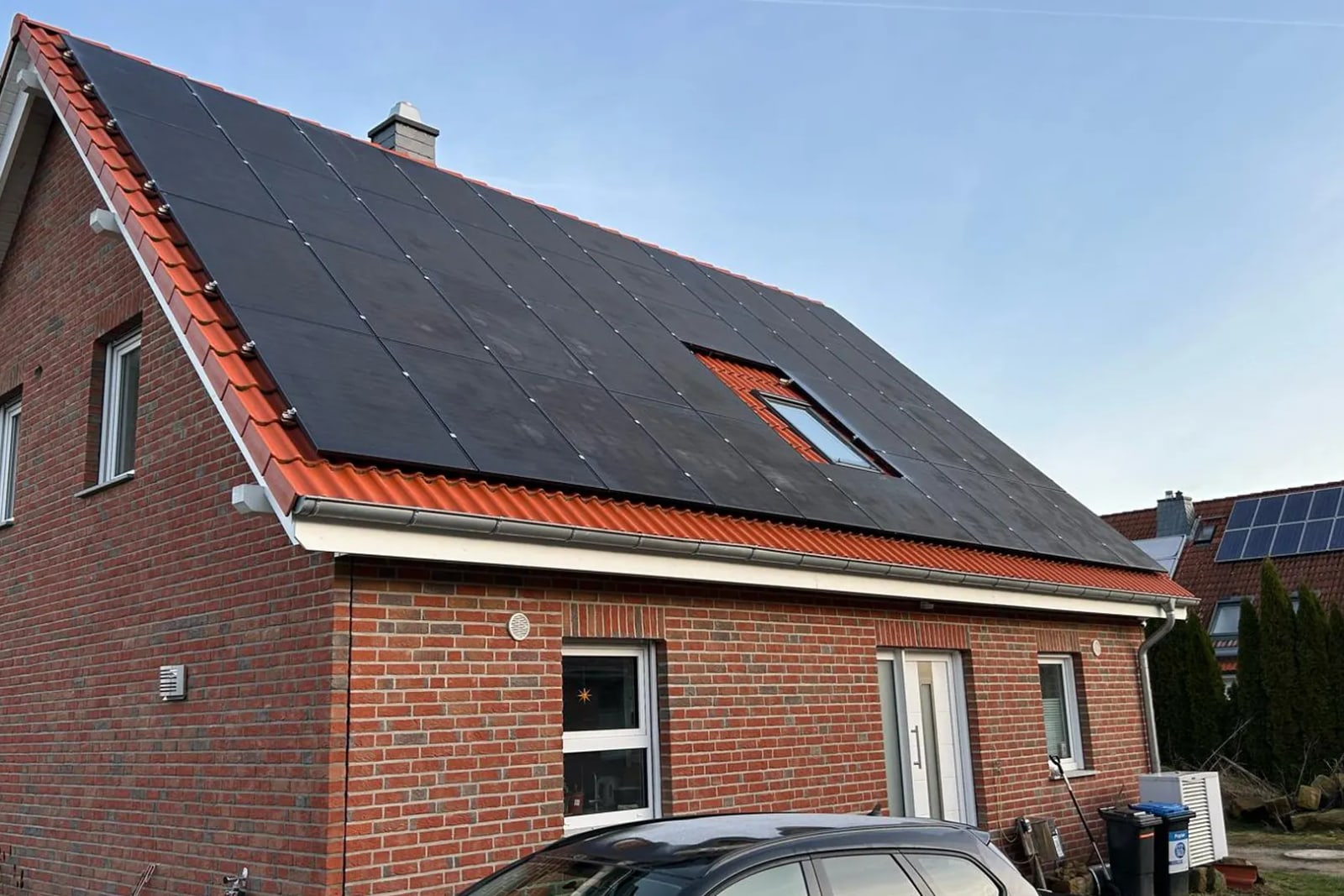
A modern 500W panel is roughly 6.5 × 3.5 ft, about 23 sq ft. Installers need clearance between rows, around obstructions and at edges, so plan on about 30 sq ft of usable roof per panel.
- A 7kW system (14 panels) needs roughly 420 sq ft — a 20 × 21 ft clear area.
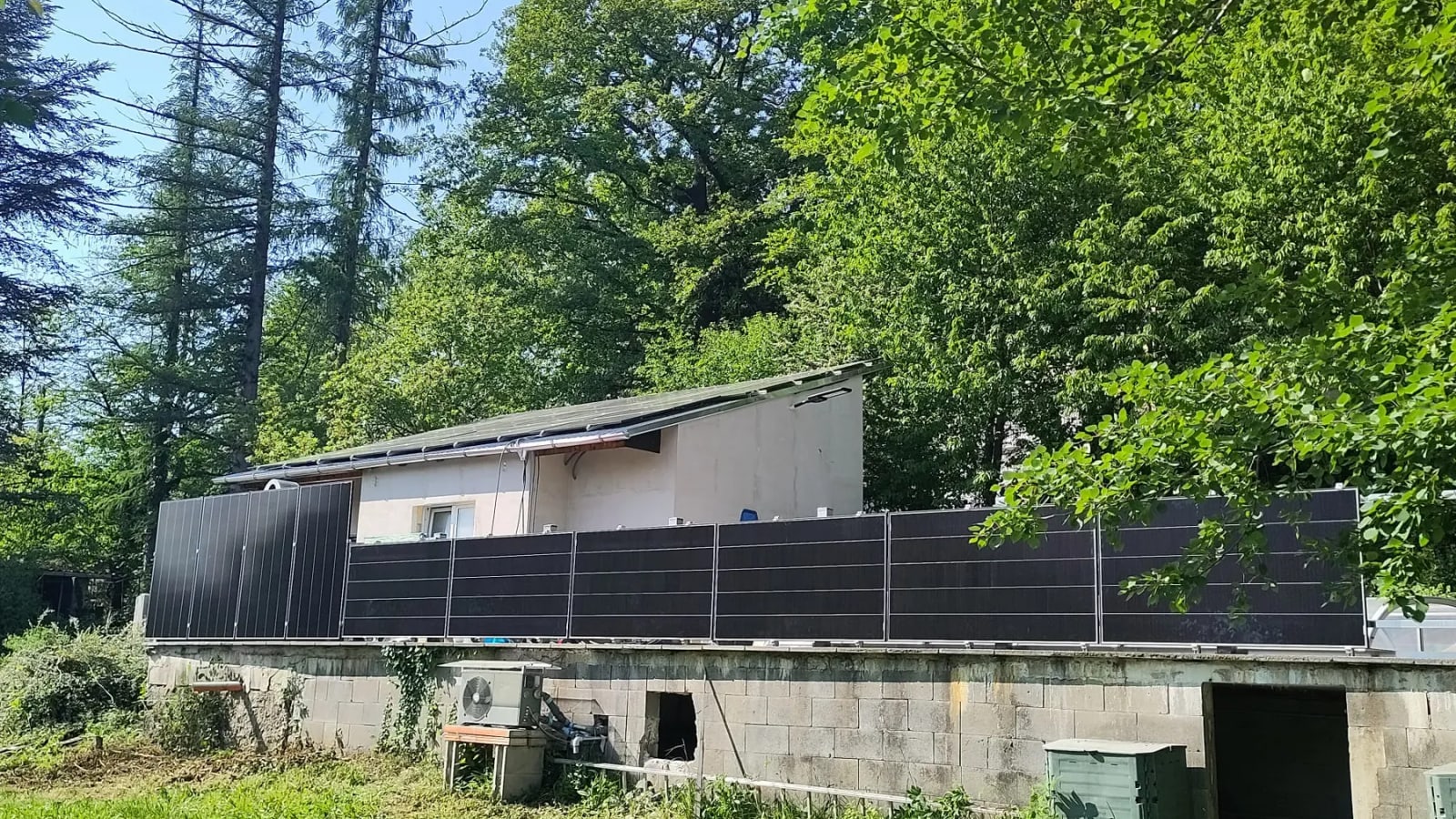
- A 12kW system (24 panels) needs roughly 720 sq ft, or a ground mount.
- North-facing planes, dormers and heavy shade are usually excluded from the count.
If the roof is tight, higher-wattage panels (550–600W) fit more output into the same area. That is usually cheaper than adding a ground mount.
Shade, tilt and direction change the answer
Production estimates assume no shade between 9am and 3pm. One shaded panel on a string inverter can drag down its whole string; microinverters or DC optimisers limit the loss to that panel. If you have a chimney, tree or neighbouring roof casting afternoon shade, either add panel-level electronics or reduce the expected output — not both.
Direction matters less than most people think: a west-facing array makes slightly less annually but more in the late afternoon, which can be worth more under time-of-use rates. A north-facing plane is rarely worth using in the northern half of the country.
If you are adding a battery
Battery sizing starts with your evening and overnight use, not your annual total. A typical home uses 10–15 kWh after sunset; a 13.5kWh battery covers most of that. Panel count is set by how much you need to recharge daily, so a battery often justifies a slightly larger array than bill offset alone.
For an off-grid property the maths is different again: size for the shortest winter day, not the annual average, then add 30–50% margin.
A practical answer
Most American homes land between 14 and 20 panels (7–10kW). If your bill is under $120 a month, 10–14 panels is usually right. Above $250, look at 20–24. The only way to be sure is to send three months of bills and a roof photo — which is what our free review does.
Questions we get about this
Only up to your usage and your utility’s export rules. Beyond that you may be exporting power for a low credit, which lengthens payback. Size to consumption first.
Yes if the inverter has spare capacity and the racking has room. Adding panels to a full string inverter usually means adding a second inverter, so plan the final size before ordering.
Total kW matters; how you reach it does not. Twenty 400W panels and sixteen 500W panels both make 8kW, but the 500W version needs less roof and fewer clamps.